
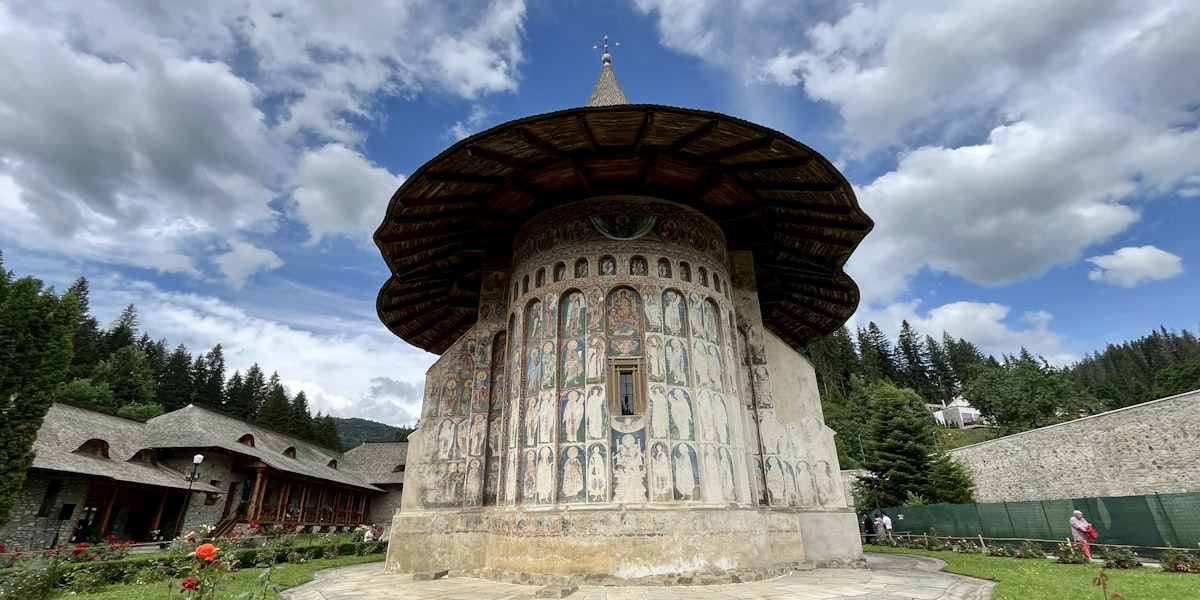
Moldavia & Bucovina Weather
Bemalte Klöster, sanfte Hügel und kulturelles Erbe
Moldau und Bukowina im Nordosten Rumäniens haben ein gemäßigt-kontinentales Klima mit kalten Wintern und warmen Sommern. Mehr Niederschlag als im Westen, was üppig grüne Landschaften schafft.
Monatliche Durchschnittstemperaturen
Sehenswürdigkeiten & Aktivitäten
Highlights
- Kloster Voroneț (die „Sixtinische Kapelle des Ostens")
- Kloster Sucevița
- Kloster Moldovița
- Iași — Kulturhauptstadt
- Kloster Putna
- Traditionelle Töpferdörfer
Aktivitäten
- Bemalte Klöster
- Geschichte & Kultur
- Wandern
- Ländlicher Tourismus
- Weinverkostung
Andere Regionen erkunden
Video guide
Häufig gestellte Fragen
What is the climate like in Moldavia, Romania?
Moldavia (eastern Romania) has a continental climate similar to Bucharest, with hot summers (26–28°C) and cold winters (-2 to 2°C). It's slightly wetter than the south, especially in June and July.
When is the best time to visit Romanian Moldavia?
May–June and September are ideal — warm enough for outdoor sightseeing, with the painted monasteries of Bucovina surrounded by lush green or autumn-gold landscapes. July–August is very hot but manageable.
What are the painted monasteries of Bucovina?
The painted monasteries of Bucovina (Voroneț, Sucevița, Moldovița, Humor) are UNESCO World Heritage sites featuring stunning 15th–16th century exterior frescoes. They're located in the northern part of Romanian Moldavia.
Does it snow in Moldavia in winter?
Yes — Moldavia receives significant snowfall from December to February, particularly in the Bucovina area. Winters can be harsh with temperatures below -10°C in the north.